
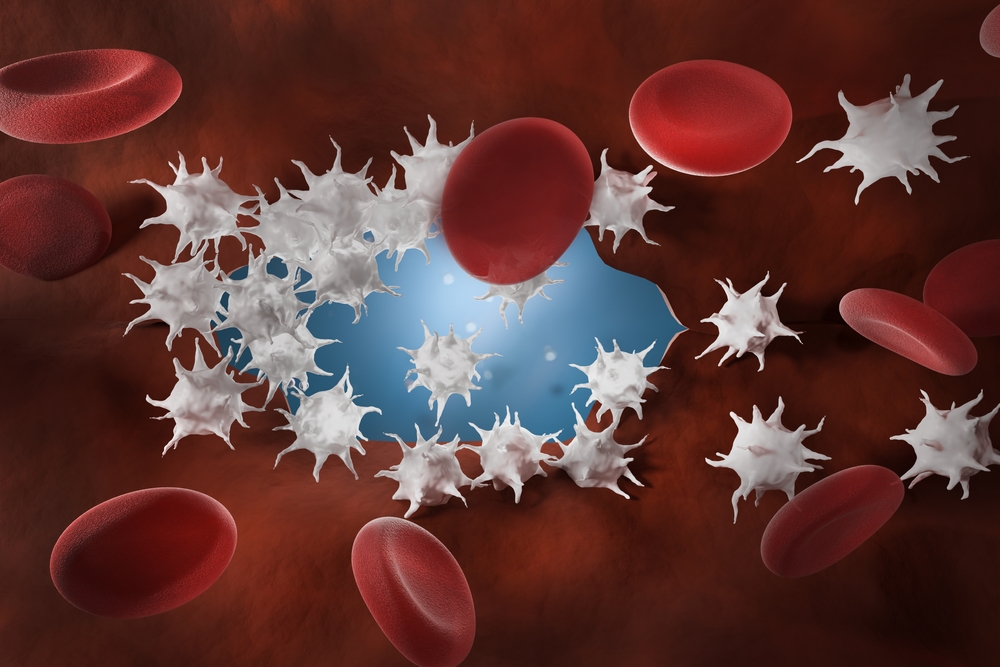
For your blood to clot, your body makes proteins known as coagulation (clotting) factors. These factors are activated one after the other in a step-by-step sequence, with each one playing a specific role in the clotting process. For normal clotting to occur, each factor must function properly and there must be enough of the factor for normal clotting to occur.
Fibrinogen is one of the final clotting factors in the process. Fibrinogen is changed into fibrin threads which form a mesh to create the blood clot and stop bleeding.
How blood clotting works

A fibrinogen test is ordered when doctors want to check whether your blood can form a proper clot—especially if there is a suspicion of a bleeding or clotting problem, and/or if you have had abnormal PT/INR and aPTT test results.
Acquired conditions affecting fibrinogen
Inherited conditions affecting fibrinogen
Several rare inherited disorders affect fibrinogen production. Dysfibrinogenaemia (abnormal fibrinogen production) is usually due to a rare mutation in the gene that produces fibrinogen. This causes the liver to make an abnormal fibrinogen. If your symptoms and health history findings suggest a fibrinogen problem, other specialised tests may be done to assess fibrinogen function further.

Two types of tests can be used to assess fibrinogen
D-dimer and fibrinogen
Fibrinogen testing is often ordered along with a D-dimer test because they give complementary information about what’s happening in the clotting system:
Sample
Blood.
Any preparation?
Certain medications may affect your results. If you are taking medications discuss this with your doctor. These include anabolic steroids, androgens, phenobarbital, fibrinolytic drugs (streptokinase, urokinase, tPA) and sodium valproate. Moderate elevations in fibrinogen may also be seen with oral contraceptives or oestrogen treatment. Blood transfusions within the past month may also affect fibrinogen test results. Do not stop any medications unless your doctor advises you to.
Your results will be presented along with those of your other tests on the same form. You will see separate columns or lines for each of these tests.
| Fibrinogen result | What it may mean |
| Normal levels | Your body has enough fibrinogen for proper clotting. |
| High levels |
Fibrinogen levels may rise sharply in any condition that causes inflammation, tissue damage or stress, such as surgery or inflammatory illnesses. Usually, these elevations are temporary, returning to normal after the underlying condition has been resolved. While fibrinogen levels are elevated, they may increase a person's risk of developing a blood clot. |
| Low levels | Your blood may take longer to clot, and you may be more prone to bleeding or bruising. In some cases, a low result reflects an underlying illness or condition.
|
Combined fibrinogen activity and fibrinogen antigen results
The fibrinogen activity test is usually ordered first, with the fibrinogen antigen test ordered as a follow-up test to see if lower activity is caused by insufficient fibrinogen or dysfunctional fibrinogen.
| Fibrinogen activity result | Fibrinogen antigen result | What this may mean |
| Low | Low | Not enough fibrinogen (e.g. liver disease, DIC). |
| Low | Normal | Fibrinogen is present but faulty. |
| Normal | Normal | You should have enough fibrinogen and it should be working properly. |
| Fibrinogen is usually measured in grams per litre or g/L. | ||
Fibrinogen testing on its own cannot usually make a diagnosis, but it provides useful information that, together with the results of other test results, can lead to a diagnosis.
Reference intervals - comparing your results to the healthy population
Your results will be compared to reference intervals (sometimes called a normal range).
If your results are flagged as high or low this does not necessarily mean that anything is wrong. It depends on your personal situation.
As different laboratories use varied reagents for testing of fibrinogen, differing fibrinogen results may be seen across laboratories. As reagents vary in their sensitivities to coagulation factors, it is important to check your specific laboratory’s ranges.
The choice of tests your doctor makes will be based on your medical history and symptoms. It is important that you tell them everything you think might help.
You play a central role in making sure your test results are accurate. Do everything you can to make sure the information you provide is correct and follow instructions closely.
Talk to your doctor about any medications you are taking. Find out if you need to fast or stop any particular foods or supplements. These may affect your results. Ask:
Pathology and diagnostic imaging reports can be added to your My Health Record. You and your healthcare provider can now access your results whenever and wherever needed.
Get further trustworthy health information and advice from healthdirect.