
Summary
What is EGFR?
EGFR stands for Epidermal Growth Factor Receptor. These receptors act like an on/off switches for cell growth and are very important in making sure that the cells in our body grow in a controlled way.
If an alteration – also called a mutation or a variant - occurs in an EGFR gene, the control system becomes faulty and cells keep growing uncontrollably – a process that causes cancer.
Genetic mutations and cancer
Our bodies are made up of trillions of cells. Almost every cell has a nucleus containing a complete set of our genetic material - our DNA.
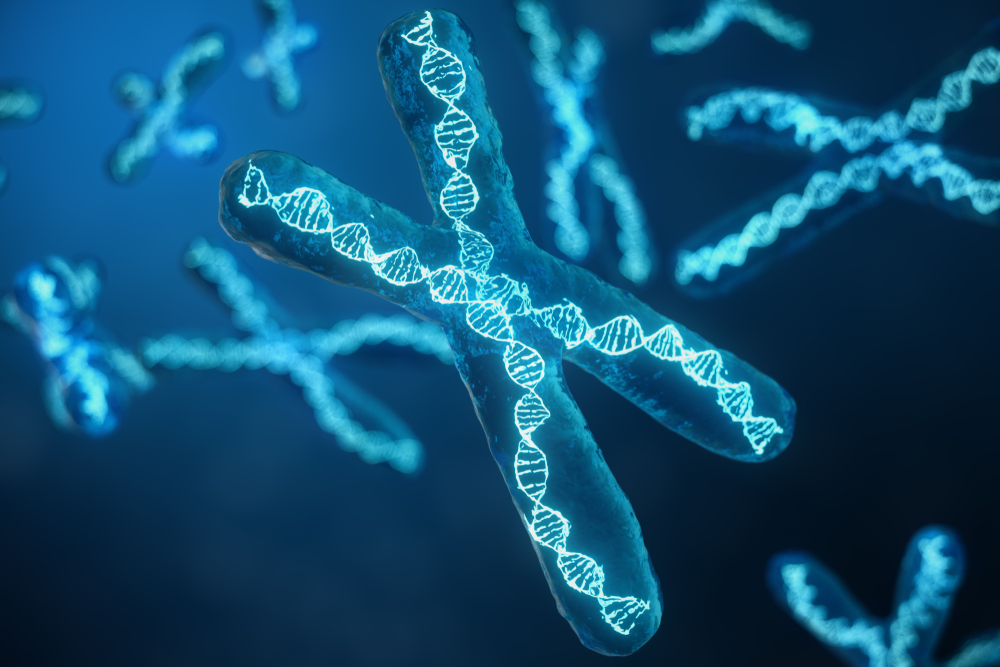
Inside the nucleus are structures called chromosomes. Tightly packaged up inside chromosomes is our DNA. Genes are short sections of DNA. Genes tell the body how to grow, work, and react to its surroundings. Genes do this by giving instructions to make proteins. Proteins are the molecules that actually do the work in cells. Genes give the instructions and proteins are the building materials made from those instructions. About two per cent of our DNA carries the instructions to make all the proteins our body needs to function, while the remaining DNA helps control how our genes work.

Our cells have a lifespan – they get old and die off. Some cells last only a few hours or days, yet others last for months or years or even a lifetime. The cells in our bodies continuously divide to grow. Each time a cell divides, it copies its DNA and sometimes, small copying mistakes can occur, called mutations.
Most mutations are harmless, and some are repaired automatically by our cells. Normally, our immune system gets rid of these mutated or altered cells but as we age our DNA repair mechanisms weaken and our immune system becomes less good at this. This means that some abnormal cells survive and multiply.
When DNA is damaged, it can change the instructions. Some mutations allow a cell to make too many copies of itself while others stop it from dying and yet others stop repairs from being made.
Cancer forms when accumulated DNA damage disables the mechanisms that normally control cell growth, repair, and death, allowing cells to grow and spread uncontrollably.

Cancer that spreads - metastatic cancer
All cancers begin in a single organ or tissue but over time, cancer cells can break off and travel to other parts of the body. Many of these cancer cells will die, but some will settle in a new location and begin to form new cancers. When cancer spreads in this way, it is called metastasis.
Cancer cells that travel do not change. Breast cancer cells that move to the liver remain breast cancer cells. Doctors will treat metastatic cancer based on the type of cancer cells, not the location of the metastatic tumour.
What happens when an EGFR gene develops an alteration?
Hormones called growth factors circulate in your body and stimulate your cells to grow. These growth factors do this by binding – attaching - to receptors on the surface of the cells.
Epidermal growth factor receptors on the surface of cells receive signals and transmit them to the nucleus at the centre of the cell, stimulating the cell to grow and make more copies of itself.

The EGFR controls this by making a protein that acts like a switch which turns signals on and off to regulate cell growth. Normally, this switch only turns on when needed, then turns off again.
When the EGFR gene develops a mutation, a faulty protein is made which keeps the receptor in the “on” position, sending continuous "grow" signals to the cell. Cells keep dividing and multiplying creating a tumour.
EGFR mutations are most commonly associated with non-small cell lung cancer (NSCLC) as well as some other cancer types.
Most cancer is caused by somatic mutations
Almost all EGFR mutations are termed somatic. This means they occur during life. They are not inherited - you were not born with them, and you cannot pass them on to your children. Only abnormal tumour cells carry the cancer-causing DNA mutations.
Why get tested
EGFR gene mutation testing is performed if you have a cancer that could be caused by an EGFR mutation, such as NSCLC. Not all cancers have an EGFR mutation. EGFR testing is done on a sample of your tumour to see if your cancer has an EGFR variant and will benefit from a targeted therapy.
If you have a positive result, you will be able to be treated with a drug that is designed to target cancer specifically caused by EGFR mutations. If you do not have an EGFR variant, you will be treated with a different type of drug.
The EGFR gene can have different types of mutations in different parts of the gene. The most common are EGFR exon 19 deletions and EGFR L858R point mutation. Knowing exactly where in the gene and what type of mutation is there will help decide which targeted therapy will be most effective and your treatment options.
There are several targeted therapies in use in Australia for NSCLC with an EGFR mutation. The specific therapy depends on the type of EGFR mutation and whether the cancer is early-stage or metastatic. The choice of therapy also often depends on your overall health, and the potential for serious complications.
There are two types of targeted therapies.
EGFR and ALK
ALK is another type of gene variant that causes cancer. ALK stands for Anaplastic Lymphoma Kinase. It works in a similar way to EGFR in managing cell growth. Tumours almost never have both EGFR mutations and ALK gene variants at the same time – so they almost never occur together in a cancer. Usually, you will be tested for EGFR first. If EGFR gene testing is negative, then a test for ALK gene variant is done.
Treatment resistance
Even though EGFR and ALK inhibitors can work very well at first, many people eventually develop drug resistance. This means the cancer finds a way around the treatment. This is why repeat testing may be necessary if the current treatment stops working and new treatment is required.
Your doctor may repeat EGFR genetic testing on a blood sample to check for cancer’s resistance to EGFR targeted treatment. The tumour leaves DNA fragments in the blood stream which can be collected and tested.
Other cancers involving EGFR
In addition to NSCLC, high levels of EGFR protein are found in some other cancers. These include colorectal (bowel) cancer, glioblastoma (brain cancer) and cancers of the head and neck, breast, and pancreas. However, having EGFR-positive NSCLC does not increase your risk of developing other, unrelated cancers in the way that some inherited cancer syndromes do.
Having the test
Sample
Most EGFR testing involves taking a sample of tumour tissue using a fine needle aspiration, needle biopsy or surgical biopsy. When used to check for drug resistance, a blood sample can be used.
Any preparation?
None.
Your results
What may be on your report
A positive test result means a genetic mutation has been identified in the genes tested. The mutations identified may be called pathogenic or disease-causing variants. Variant is another name for mutation. The variants of strong or potential clinical significance are highlighted, and the results will help your doctors select the most appropriate treatment for the mutations identified.
Genetic testing reports are highly complex. They typically present the most important and relevant information first followed by supplementary information.
Questions to ask your doctor
The choice of tests your doctor makes will be based on your medical history and symptoms. It is important that you tell them everything you think might help.
You play a central role in making sure your test results are accurate. Do everything you can to make sure the information you provide is correct and follow instructions closely.
Talk to your doctor about any medications you are taking. Find out if you need to fast or stop any particular foods or supplements. These may affect your results. Ask:
More information
Pathology and diagnostic imaging reports can be added to your My Health Record. You and your healthcare provider can now access your results whenever and wherever needed.
Get further trustworthy health information and advice from healthdirect.
What is Pathology Tests Explained?
Pathology Tests Explained (PTEx) is a not-for profit group managed by a consortium of Australasian medical and scientific organisations.
With up-to-date, evidence-based information about pathology tests it is a leading trusted source for consumers.
Information is prepared and reviewed by practising pathologists and scientists and is entirely free of any commercial influence.